Top China Quick Connect Couplers Manufacturers?
Choosing the Top China Quick Connect Couplers Manufacturers requires more than comparing catalog prices. Buyers need dependable flow control, repeatable sealing, and clear technical support. A polished website is not proof of manufacturing depth. Real confidence comes from evidence, including material certificates, pressure-test records, dimensional reports, and traceable batch information. This guide examines Chinese manufacturers through those practical signals. It considers hydraulic, pneumatic, agricultural, construction, and industrial applications. Each field creates different demands for coupling bodies, valves, seals, and surface protection. Small details matter. A scratched sleeve can become a serious maintenance concern.
The review also considers production experience, engineering capability, quality systems, and export communication. Experienced suppliers should explain connection standards, working pressure, temperature limits, and media compatibility without vague promises. They should provide samples that match production parts. That point deserves attention. Some evaluations rely too heavily on factory scale or claimed certifications. Those indicators help, but they cannot replace independent verification and application testing. Buyers should request drawings, inspection procedures, warranty terms, and realistic lead times. A reliable supplier makes technical limits visible, not hidden in fine print.
No single manufacturer suits every project. One company may offer excellent stainless-steel couplers, while another provides stronger customization or faster small-batch support. This overview avoids declaring a universal winner. Instead, it develops a practical comparison framework for selecting reliable Quick Connect Couplers partners in China. Readers can compare product consistency, testing discipline, communication, and after-sales response. The final choice should reflect actual operating conditions, not marketing language alone. Even careful research can miss something. A controlled trial remains wise before large-scale purchasing.
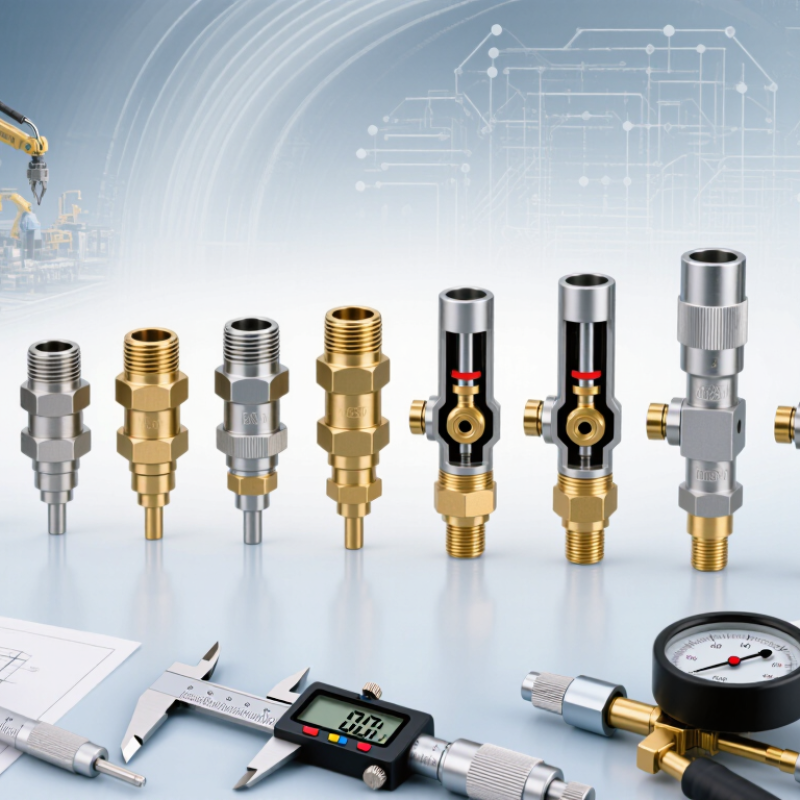
What Are Quick Connect Couplers and How Do They Work?
Top China Quick Connect Couplers Manufacturers?
Quick-connect couplers join hoses, pipes, or tools without repeated threading. A plug enters a socket, and an internal locking sleeve holds it in place. Many models use valves that open only after full engagement. This limits fluid loss during connection. Some couplers suit air, while others handle water, oil, or mild chemicals.
Material choice matters. Brass, stainless steel, and engineered polymers behave differently under pressure, heat, and corrosion. When comparing Chinese production, I check port size, working pressure, temperature range, flow rate, and seal material. A mismatch may look harmless. It can cause leakage, difficult release, or premature seal wear. Couplers may share similar shapes, but they are not always interchangeable.
The operator should depressurize the equipment when required by its instructions. Align the plug and socket, push them together, and listen for the locking click. A gentle pull test confirms engagement. Keep it clean. Dust on the sealing face can create a slow leak that appears hours later. Regular inspection should look for flattened O-rings, bent sleeves, rust, and scratched sealing surfaces. I have found that small scratches are easy to dismiss, yet they often become recurring maintenance problems. The design is convenient, but it is not foolproof. Flow ratings also need careful checking because test conditions may differ between suppliers.
Quick Connect Couplers: Typical Seal Temperature Ranges
Quick connect couplers use shut-off valves that open when the two halves are connected and close when disconnected. Seal material selection affects temperature resistance, chemical compatibility, and service life.
Typical published service-temperature ranges for commonly used elastomers: NBR, FKM, and EPDM. Actual limits vary by compound, pressure, fluid, coupling design, and operating conditions.
Key Types of Quick Connect Couplers Made in China
Top China Quick Connect Couplers Manufacturers?
China’s quick connect coupler industry covers several practical designs. Hydraulic flat-face couplers limit fluid loss during connection and suit excavators, loaders, and mobile systems. Poppet couplers offer strong flow capacity, but trapped pressure can make reconnection difficult. Threaded screw couplers handle vibration well and fit high-pressure circuits. Pneumatic Push-To-Connect Couplers support fast tool changes on factory air lines. Dry-break couplers reduce leakage during chemical, fuel, or fluid transfer. Electrical-hydraulic multi-couplers combine several connections in one operation. A 2024 MarketsandMarkets analysis estimated the global quick disconnect market could grow near 6% annually through the forecast period. That figure supports demand, but product selection still depends on pressure, temperature, and contamination control.
Tips: Ask Chinese manufacturers for ISO 16028 or ISO 14541 test evidence. Check working pressure, burst pressure, flow rate, seal material, and cycle-life results. Request samples before volume orders. A coupler may pass a bench test yet fail after dusty field use. This is where many purchasing decisions become too optimistic.
Experienced buyers should inspect machining consistency and cleaning quality. Look for clear lot numbers and traceable inspection records. Stainless steel, carbon steel, and plated surfaces behave differently in humid environments. Seal choice also matters; nitrile suits many oil applications, while fluorocarbon handles higher temperatures. Industry reports provide useful market direction, not engineering approval. Independent testing remains necessary, especially for high-pressure equipment. Personally, I would treat unusually low pricing as a signal for deeper inspection, not an automatic advantage.
How to Evaluate China’s Leading Coupler Manufacturers
Choosing among China’s leading quick connect coupler manufacturers requires more than comparing online prices. A dependable supplier should understand pressure, temperature, flow, and media requirements. Field experience matters here. Ask how the manufacturer handles seal wear, repeated connection cycles, and contamination risks. Request material certificates, dimensional drawings, and recent pressure-test records. These documents reveal technical discipline.
Inspect the factory’s production controls, not only its showroom. Look for incoming material checks, CNC machining records, cleaning procedures, and final inspection stations. A coupler may look precise but still leak after thermal cycling. Samples matter. Test them with your actual hoses, operating pressure, and connection frequency. Check whether locking sleeves move smoothly with gloves. Small details affect daily safety and efficiency.
Reliable manufacturers usually offer traceable batches and clear corrective-action reports. They should explain tolerances without hiding behind vague claims. Communication is another practical test. Send the same technical questions to several suppliers and compare the accuracy of their replies. I once treated fast responses as proof of expertise. That was a mistake. Speed cannot replace evidence. A serious evaluation should include factory video checks, sample testing, production audits, and written warranty terms. No factory is perfect. However, manufacturers that admit limitations often inspire more confidence than those promising every specification. Their after-sales process should identify failures, preserve test records, and provide realistic replacement timelines.
Top China Quick Connect Coupler Manufacturers by Product Strength
Top China Quick Connect Coupler Manufacturers by Product Strength
China’s strongest quick connect coupler manufacturers compete through product specialization, not catalogue size. The 2024 MarketsandMarkets report projects the global quick coupling market to grow from about USD 1.2 billion in 2023 to USD 1.6 billion by 2028. This growth reflects demand from construction equipment, factory automation, agriculture, and fluid handling.
Hydraulic coupler specialists usually stand out through high-pressure performance, hardened locking balls, and replaceable seal kits. Look for products tested against ISO 7241 requirements, with working pressures commonly reaching 250–350 bar. Face-seal designs can reduce air inclusion during connection. That matters on excavators and mobile power units.
Pneumatic manufacturers show strength differently. Their advantages include low connection force, stable airflow, and compact sleeve designs. Quality suppliers should provide flow-rate curves, leakage results, material certificates, and cycle-test records. The Pneumatic Division of the International Federation of Robotics reports continuing automation growth, increasing demand for repeatable connections in production lines.
Fluid-transfer specialists may offer dry-break couplers, stainless-steel bodies, and chemical-resistant seals. These details suit coolant, oil, water, and controlled industrial fluids. However, product claims can look better than field performance. I would request samples, inspect machining marks, and test couplers under heat, vibration, and repeated connection cycles. One catalogue is never enough. Cost remains important, but seal life and service access often decide the real purchasing value.
What to Check Before Choosing a Chinese Coupler Supplier
Top China Quick Connect Couplers Manufacturers?
Before choosing a Chinese coupler supplier, verify performance beyond catalog photos. ISO 7241 covers hydraulic quick-action couplings, while ISO 16028 addresses flat-face designs. Ask for certificates, material grades, pressure ratings, and test conditions. A reliable factory should explain burst pressure, impulse cycles, leakage limits, and temperature range clearly. Vague answers are warning signs.
The U.S. Department of Energy reports that compressed-air leaks can waste 20–30% of system output. A poorly sealed coupler may contribute to that loss. Request flow-rate data at your actual working pressure, not only laboratory figures. Check thread accuracy, seal compatibility, plating thickness, and contamination controls. For repeated use, inspect coupling fatigue and connection force. Small details matter.
Factory capability also requires physical verification. Review production records, calibration certificates, traceability procedures, and sample inspection reports. An independent pre-shipment inspection can compare dimensions, surface defects, packaging, and random pressure-test results. Ask whether samples come from normal production. They sometimes do not. One practical mistake is approving a supplier after testing one perfect sample. Require several batches, including different sizes and sealing materials. A supplier that documents failures may be more trustworthy than one claiming zero defects. Pricing still matters, but replacement labor, leakage, downtime, and rejected shipments can cost more than the initial unit price.
