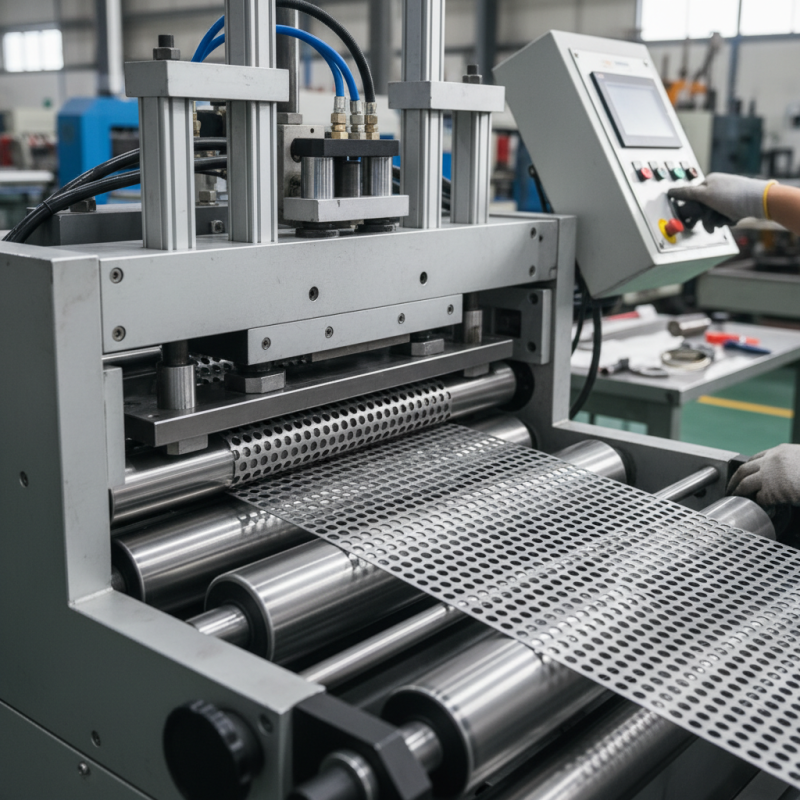
Essential Tips for Choosing the Right Perforated Mesh Machine?
Choosing the right Perforated Mesh Machine can be a daunting task. With various options available, it's crucial to consider several key factors. The right machine can significantly impact your production efficiency and product quality.
Understanding the machine's capabilities is vital. Different machines offer distinct features. Some may excel in speed, while others provide precision in hole sizes. Assessing your specific needs will guide you toward the right choice.
Moreover, evaluating the manufacturer is essential. A reputable brand often reflects reliability and superior support. Reading reviews and seeking expert opinions can enhance your decision-making process. Ultimately, investing time in research will pay off. Careful consideration can lead to better results and satisfaction with your Perforated Mesh Machine.
Understanding Perforated Mesh Machines: Key Features to Consider
When selecting a perforated mesh machine, understanding key features is essential. The first aspect is the material used in the construction. Durable materials ensure longevity and consistent performance. Consider how the machine interacts with different metals. Some might struggle with thicker materials, leading to inefficiency.
Another critical feature is the machine's punching capabilities. Look for machines that offer adjustable punching speeds. This flexibility allows you to customize production based on specific project needs. It's also important to pay attention to the hole patterns that the machine can achieve. Complex designs may require machines with advanced technology, influencing your choice significantly.
Lastly, ease of maintenance should not be overlooked. A machine that requires frequent servicing can lead to production delays. Understanding how to access key components is vital for routine checks. Sometimes, machines offer features that sound great but complicate maintenance. Balancing innovative features and straightforward upkeep is a vital consideration.
Evaluating Material Compatibility for Your Perforated Mesh Needs
When selecting a perforated mesh machine, material compatibility is crucial. Different materials possess unique properties that affect perforation processes. For instance, metals like stainless steel require specific tools to handle their strength and resistance. In contrast, softer materials like plastics may need a different approach altogether. According to industry reports, improper material selection can lead to inefficiencies, causing production delays up to 30%.
Evaluating the type of material can save time and resources. Conduct tests on small samples before making a large investment. Monitor how different materials react during perforation. It can reveal unexpected challenges. If a material is too brittle, it might crack or shatter. This not only wastes material but also affects the machine's longevity.
Tips to remember: assess thickness, grain direction, and tensile strength, as all impact performance.
Knowledgeable users suggest creating a checklist tailored to specific projects. Consider noting material density and the desired hole size. This can guide you in making better decisions. Surveys indicate that 45% of engineers emphasize thorough research on material types before the machine selection process. Reflecting on previous project outcomes can improve future choices significantly.
Assessing Production Capacity and Efficiency of the Machine
When selecting a perforated mesh machine, assessing its production capacity and efficiency is crucial. It helps determine how well the machine meets your business needs. A machine that can produce high volumes quickly can enhance productivity. However, efficiency should not be sacrificed for speed. Look for machines that maintain quality while producing large quantities.
Production capacity is often indicated in terms of output per hour. It's vital to match this with your anticipated demand. If you overestimate your needs, you may end up with costly machinery that doesn’t even get used. Conversely, underestimating can lead to delays and lost opportunities. Analyzing your current and future production requirements is essential.
Efficiency is also about energy consumption and waste reduction. A machine that uses less energy and produces minimal waste saves costs long-term. While some machines may promise high speeds, they can be inefficient if they create excess scrap material. Reflect on how the machine's design impacts these factors before making a decision. Consider real-world feedback and expert opinions to gauge overall performance. This is an important aspect often overlooked, yet it can significantly impact your operational success.
Production Capacity and Efficiency of Perforated Mesh Machines
Comparing Different Types of Perforated Mesh Machines Available
When selecting a perforated mesh machine, it's important to compare different types. Each machine has unique features. Some are designed for thicker materials, while others handle lighter sheets. Think about the material you will be working with. Different machines can impact efficiency and output quality.
Pay attention to the type of perforation you need. Machines vary in their ability to create different hole patterns and sizes. Some may offer customizable options for specific applications. It's critical to choose machinery that fits your production demands. Factor in the speed of operation. Some machines operate faster, but may sacrifice precision. Others ensure fine detail but take longer.
Maintenance and support are also key considerations. Understand the machine's upkeep requirements before committing. It’s wise to read reviews and ask for user experiences. Consider how often repairs are needed or parts must be replaced. Investing in reliable machines is essential for long-term success. Assess your options carefully before making a decision.
Budget Considerations: Cost vs. Quality in Machine Selection
Choosing the right perforated mesh machine is a critical decision for many manufacturers. Budget considerations play a significant role in this process. A balance between cost and quality often dictates the final choice. According to industry reports, up to 70% of companies state that quality directly impacts their production efficiency.
Investing in a lower-cost machine may seem appealing initially. However, this can lead to higher maintenance costs over time. An estimated 30% of businesses reported increased operational downtime due to cheaper equipment failures. This underscores the importance of a well-planned budget that accounts for long-term expenses.
When selecting a machine, it’s vital to analyze both current and future needs. Evaluate the machine's capabilities against your production goals. Do not overlook the importance of reliable supplier support in your budget planning. In a recent study, 65% of industry experts emphasized that after-sales service is essential for long-term success. Choose a machine that aligns with your needs and offers durability, even if it requires a higher upfront investment.