Why is Mold Pressure Critical for Manufacturing Success?
Mold pressure plays a crucial role in the manufacturing process, especially in plastic injection molding. Industry reports indicate that optimal mold pressure can significantly improve product quality and reduce defects. According to a recent study by the International Society of Plastics Engineers, proper mold pressure can decrease plastic waste by up to 30%.
High mold pressure ensures that materials fill the mold cavity uniformly, preventing air pockets or voids. However, achieving the right balance can be challenging. Excessive pressure may lead to increased operational costs and potential damage to molds. Many manufacturers still struggle to pinpoint the ideal pressure settings for their processes.
Emphasizing mold pressure requires expertise and continual monitoring. With technology advancements, real-time sensors can help in achieving precise control. Nevertheless, not all companies invest in such innovations, leaving room for improvement. Understanding mold pressure’s impact is vital for manufacturers aiming for efficiency and excellence in production.
Understanding Mold Pressure and Its Role in Manufacturing
Mold pressure is a critical factor in the manufacturing process, particularly in injection molding. Understanding this concept can significantly impact product quality and production efficiency. According to a 2022 industry report by the Plastics Industry Association, optimal mold pressure is essential for achieving uniform material distribution. When pressure is insufficient, defects such as sink marks and voids can arise. On the other hand, excessive pressure may lead to dimensional inaccuracies or even mold damage.
The impact of mold pressure extends beyond just quality. It also affects cycle time and energy consumption. A study from the Polymer Processing Society suggests that maintaining the ideal pressure can reduce production time by up to 30%. Thus, controlling mold pressure is not just about quality; it also directly influences overall operational costs.
Tips: Regularly calibrate your equipment. Monitoring mold pressure can help you maintain consistency. Consider training your team on best practices for pressure management. While most manufacturers aim for perfection, it's crucial to analyze past mistakes. Reflecting on production errors can provide valuable insights. Learning from these experiences fosters continuous improvement and enhances product reliability.
The Physics of Mold Pressure in Production Processes
Mold pressure plays a vital role in manufacturing processes, particularly in injection molding. It directly influences the quality of the final product. Understanding the physics behind mold pressure can help optimize production efficiency and reduce defects. Proper control of mold pressure ensures adequate material flow, which is critical for achieving uniform wall thickness.
In production, too much pressure can lead to issues like flash or warping, while too little can cause incomplete filling. The balance is delicate. Adjusting mold temperature and material viscosity also impacts pressure levels. Each material behaves differently, requiring careful monitoring. Operators must consider these variables to maintain consistency.
Some manufacturers may overlook mold pressure, thinking it’s minor. This can result in costly mistakes. Regular training and evaluations can improve understanding. Knowledge sharing among teams can enhance overall performance. Reflection on past mistakes helps avoid future errors.
Importance of Mold Pressure in Manufacturing
This chart illustrates the correlation between mold pressure levels and manufacturing efficiency. As the pressure increases from low to high, the efficiency of the production process also improves significantly.
Factors Affecting Mold Pressure in Manufacturing
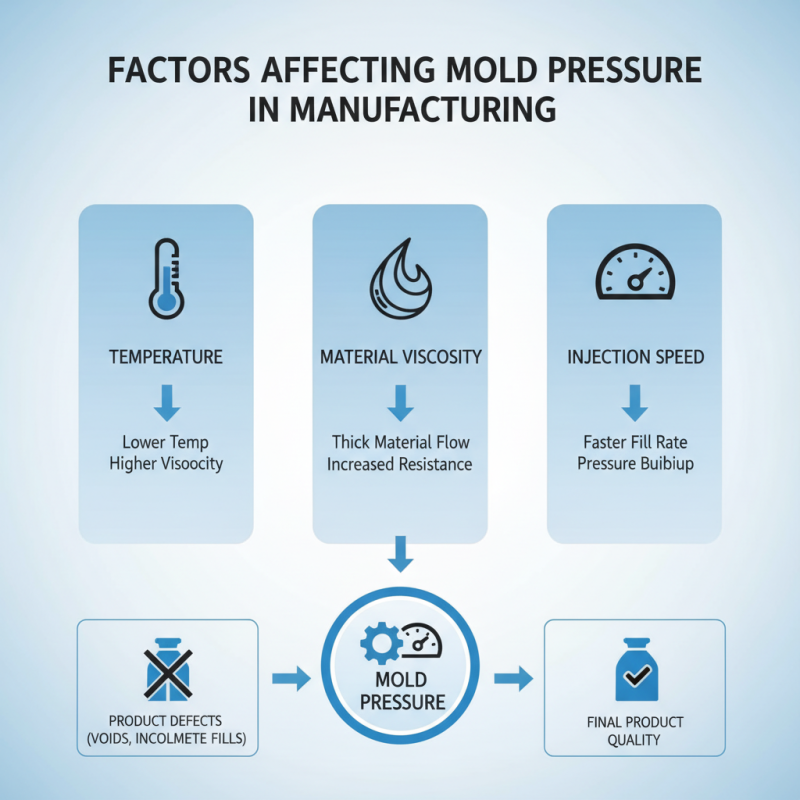
Mold pressure plays a vital role in manufacturing processes. Several factors influence this pressure, affecting the final product's quality. Variations in temperature, material viscosity, and injection speed can impact mold pressure significantly. For instance, lower temperatures can lead to higher viscosity, causing difficulties in material flow. This may result in incomplete fills or voids in the molded part.
Another crucial element is the material used in manufacturing. Some materials require specific pressure levels to achieve optimal results. Understanding these requirements can be challenging. Manufacturers might face issues if they do not adjust the pressure accordingly. Inconsistent pressure can lead to defects, such as surface imperfections or dimensional inaccuracies.
The design of the mold also plays a part. Complex shapes may need careful pressure management. If not, the mold could experience stress, leading to premature wear or even failure. Engineers should constantly reflect on these aspects. They may need to revisit their designs to enhance mold pressure control. This reflection can lead to improved outcomes in future projects, helping to ensure manufacturing success.
Consequences of Inadequate Mold Pressure on Product Quality
Mold pressure plays a pivotal role in manufacturing processes. Insufficient mold pressure can lead to significant quality issues in the final product. When pressure is inadequate, the material may not fill the mold completely. This could result in voids or weak points in the product. These defects are not easily visible at first glance. However, they can weaken the overall structure over time.
Inadequate mold pressure can also affect surface finish. A smooth surface often requires precise pressure to achieve uniform material distribution. Low pressure can lead to rough surfaces, impacting aesthetics and functionality. The end user may notice these discrepancies, and this can damage the manufacturer’s reputation.
Adjusting mold pressure requires expertise. Many manufacturers struggle with finding the right balance. Too much pressure can lead to other issues, such as flash or warping. The challenge lies in experimenting and having a thorough understanding of materials and processes. Every change affects the final product. Therefore, it is crucial to monitor and adjust mold pressure carefully.
Why is Mold Pressure Critical for Manufacturing Success? - Consequences of Inadequate Mold Pressure on Product Quality
| Consequences |
Impact on Product Quality |
Percentage of Defects (% |
Common Issues |
| Inconsistent Wall Thickness |
Leads to weak spots and potential failure |
15% |
Warping, Cosmetic Defects |
| Air Traps and Voids |
Compromises structural integrity |
20% |
Bubbles, Incomplete Filling |
| Surface Imperfections |
Affects aesthetics and usability |
10% |
Scratches, Bumps |
| Dimensional Inaccuracy |
Mismatched parts leading to assembly issues |
25% |
Size discrepancies, Functionality Failures |
| Reduced Durability |
Shorter product lifespan |
18% |
Cracks, Breakage |
Best Practices for Optimizing Mold Pressure in Production
Mold pressure plays a significant role in manufacturing success. Optimizing it can lead to improved product quality and production efficiency. Many manufacturers overlook this vital aspect, leading to wasted materials and time.
Understanding the right mold pressure is crucial. Each material behaves differently under pressure. Thin-walled parts may require higher pressure, while thicker sections might need just the opposite. Monitoring mold pressure helps in detecting variations and inconsistencies. This feedback loop can help prevent defects and improve overall output quality.
Regular calibration of equipment ensures consistent pressure application. Investing in pressure sensors allows for better real-time monitoring. However, not all facilities prioritize this. Some might face challenges due to outdated machinery. It’s essential to regularly assess the production process for improvements. Addressing mold pressure optimally can be transformative. Effective communication among team members regarding pressure settings reinforces a culture of quality.