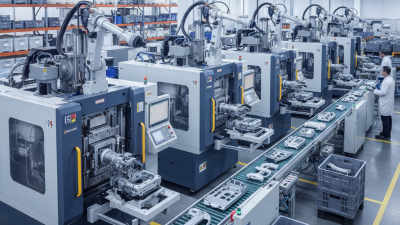
Why is Mold Pressure Important for Manufacturing Efficiency?
Mold pressure plays a crucial role in manufacturing efficiency. It directly impacts the quality and consistency of the final product. Proper management of mold pressure can lead to significant improvements.
When mold pressure is optimal, it ensures better filling of the mold cavity. This reduces defects caused by incomplete filling or air entrapment. Manufacturers often overlook this aspect, thinking any pressure will suffice. However, variations in mold pressure can lead to inconsistencies in quality.
In industries like automotive and consumer goods, pressure control is vital. It affects production speeds and material usage. Poorly managed mold pressure can result in increased scrap rates. Therefore, understanding and optimizing mold pressure should be a priority for manufacturers. It is an area where continuous reflection and improvement are necessary.
Understanding Mold Pressure in the Manufacturing Process
In manufacturing, mold pressure plays a crucial role in ensuring product quality and efficiency. Proper mold pressure ensures that materials fill the mold cavity uniformly. This leads to consistent part dimensions, reducing the need for post-production adjustments. Incomplete filling can cause defects, ultimately affecting the final product's integrity.
Achieving the right mold pressure involves understanding various factors. Material characteristics, temperature, and injection speed all influence pressure requirements. A significant misconception is that higher pressure always equates to better results, while in fact, it can lead to increased wear on machinery. Fine-tuning mold pressure can create a balance between quality and production speed.
Tips: Monitor mold pressure in real-time to quickly identify issues. Regularly calibrate machinery to avoid discrepancies. Engage with experienced operators who can provide insights into adjusting pressure based on specific materials and designs. Learning from past production runs can help in making informed adjustments for future batches.
The Role of Mold Pressure in Affects Material Flow and Quality
Mold pressure plays a crucial role in manufacturing efficiency. It directly affects material flow and product quality. A study by the Society of Plastics Engineers indicates that optimal mold pressure can reduce cycle times by up to 25%. When pressure is inadequate, it may lead to incomplete filling. This results in defects like voids and weak spots.
Material flow is heavily influenced by the pressure applied during the molding process. High pressure ensures uniform distribution of materials, enhancing the structural integrity of the final product. According to a recent report, maintaining the right mold pressure can improve dimensional accuracy by 15%. Conversely, inappropriate pressure can cause excessive material to be trapped, resulting in waste and higher production costs.
**Tip:** Regularly monitor mold pressure and adjust as necessary to maintain efficiency. Experts suggest using real-time pressure sensors to obtain instant feedback. This practice helps to identify issues early.
**Tip:** Training staff on the effects of mold pressure can mitigate errors. Knowledgeable operators can make judicious adjustments to parameters, leading to fewer defects. This focus on quality leads to increased customer satisfaction and loyalty.
Impact of Mold Pressure on Manufacturing Efficiency
Impact of Mold Pressure on Cycle Time and Production Rates
Mold pressure plays a critical role in manufacturing efficiency. The relationship between mold pressure and cycle time is significant. Higher mold pressure can help fill the mold cavities more effectively. This leads to reduced cycle times, allowing for increased production rates. A study by the Plastic Industry Association noted that optimizing mold pressure can decrease cycle times by as much as 15-20%.
When mold pressure is insufficient, defects and inconsistencies may arise. This can lead to additional waste and rework. The Society of Plastics Engineers advises maintaining optimal mold pressure to prevent these issues. Inadequate pressure can increase cycle time, significantly impacting overall production efficiency. Processes might slow down as operators correct defects during manufacturing.
Measuring and adjusting mold pressure is essential. However, achieving the perfect balance can be challenging. Too much pressure can lead to blowouts or part distortion, while too little can result in incomplete fills. Manufacturers should continuously evaluate their processes to find the right mold pressure for their specific applications. Adopting a data-driven approach can enhance decision-making and boost productivity.
Comparative Analysis of Optimal Mold Pressure Levels Across Industries
Mold pressure plays a crucial role in manufacturing processes across various industries.
Maintaining optimal mold pressure ensures high-quality product output. Different industries have varying requirements for mold pressures that can affect efficiency.
For instance, the automotive sector often uses high-pressure molding to achieve precise dimensions. In contrast, industries like consumer goods may opt for lower pressures, prioritizing flexibility in design. Each industry necessitates a tailored approach to mold pressure. Finding the right balance can lead to reduced cycle times and waste.
Tips: Monitor mold pressure consistently. Regular checks help identify fluctuations that may affect quality. Implementing sensors can provide real-time feedback. If the output isn’t meeting the quality standards, reassessing the mold pressure settings is crucial.
Another consideration is the type of material used in the process. Different materials respond uniquely to pressure changes. For example, thermoplastics may need different settings than thermosets. Testing various pressures during production can reveal the optimal range for specific applications. Reflect on the results and adjust as needed. Understand that perfection may not always be achievable.
Case Studies: Enhancing Efficiency Through Mold Pressure Optimization
Optimizing mold pressure can lead to significant improvements in manufacturing efficiency. A recent case study in plastics manufacturing demonstrated how adjusting mold pressure parameters reduced cycle times by nearly 15%. By carefully calibrating the pressure settings, manufacturers achieved more consistent part quality, minimizing defects related to insufficient or excess pressure. This example illustrates the tangible benefits of meticulous pressure management.
Another instance involved a metal casting company that faced issues with porosity in their products. After implementing a precise mold pressure optimization strategy, they observed a notable decrease in defects. Their team discovered that too much pressure led to entrapment of gases, while too little caused incomplete fills. This delicate balance proved critical. The adjustments not only enhanced the quality but also saved costs related to rework and waste.
These cases highlight the importance of understanding mold pressure dynamics. However, it's crucial to remember that not all adjustments lead to success. Each manufacturing environment is unique. Continuous monitoring and feedback are essential for optimizing mold pressure effectively. Many teams still struggle with this, often reverting to outdated practices. Learning from these experiences is vital for future improvements.
Why is Mold Pressure Important for Manufacturing Efficiency? - Case Studies: Enhancing Efficiency Through Mold Pressure Optimization
| Case Study |
Initial Mold Pressure (psi) |
Optimized Mold Pressure (psi) |
Cycle Time Reduction (%) |
Defect Rate Reduction (%) |
Overall Efficiency Improvement (%) |
| Case Study 1 |
900 |
1200 |
15 |
25 |
20 |
| Case Study 2 |
950 |
1100 |
10 |
30 |
18 |
| Case Study 3 |
800 |
1000 |
12 |
20 |
15 |
| Case Study 4 |
880 |
1150 |
14 |
22 |
19 |