How to Find China Top Thermoplastic Injection Molding?

Finding China’s top thermoplastic injection molding partner requires more than comparing online rankings. “Top” depends on your product, material, volume, tolerances, and delivery expectations. A factory producing automotive clips may not suit a medical enclosure or a transparent consumer part. The best choice should match technical ability with dependable communication. Small details matter.

A serious evaluation begins with evidence. Review the supplier’s project history, equipment list, mold-making capacity, and inspection process. Ask for relevant samples, not only polished photographs. Examine parting lines, gate marks, warpage, surface finish, and dimensional consistency. Confirm whether the company manages tooling internally or outsources critical work. Clear answers usually reveal practical experience. Vague promises deserve careful attention. Request material certificates, process records, and quality reports when your application requires them. ISO certification can support credibility, but it cannot replace direct verification. A video audit, factory visit, or independent inspection may provide stronger evidence.

Cost remains important, but the lowest quotation can hide slower revisions, weak tooling control, or unstable production. Compare mold steel, cavity design, cycle time, packaging, maintenance, and shipping terms. Discuss engineering support before signing any agreement. Reliable suppliers should explain design-for-manufacturing changes without forcing unnecessary modifications. Still, no supplier is perfect. Even an experienced factory may misjudge a difficult resin or underestimate a complex tolerance. That possibility should shape the process. Use prototypes, written specifications, approval samples, and measurable acceptance criteria. With patient research and honest communication, buyers can identify a China-based partner that delivers consistent thermoplastic injection molding results rather than attractive promises alone.
How to Find China Top Thermoplastic Injection Molding?

Define Your Thermoplastic Injection Molding Requirements

How to Find China Top Thermoplastic Injection Molding?

Define Your Thermoplastic Injection Molding Requirements

A reliable China supplier search starts with a clear molding brief. State the resin grade, part weight, annual volume, wall thickness, tolerances, surface finish, and intended service temperature. Include a 2D drawing and 3D model. Photos alone create costly assumptions.

Grand View Research estimates the global injection molding machine market will grow at about 4.6% annually from 2024 to 2030. This growth reflects rising demand for repeatable, automated production. Your requirements should therefore include cycle-time targets, machine clamping force, cavity count, and expected scrap rates. Measure twice.

Material selection needs evidence. Request the resin’s technical data sheet, lot traceability, drying conditions, and mold-temperature range. For food-contact, medical, or electrical applications, define the required regional standards before quoting. A cheaper resin can change shrinkage, color, and part strength. I have seen projects fail because “equivalent material” was never defined.

Ask each shortlisted manufacturer for capability studies, first-article inspection records, mold-flow analysis, and process-control plans. Confirm how they measure critical dimensions and retain samples. The 2024 PlasticsEurope report emphasizes increasing pressure for resource efficiency across plastics manufacturing. Include recycled-content limits, energy expectations, and waste handling in your specification. These details may feel excessive. They prevent vague promises from becoming production defects.
Research and Compare Qualified Chinese Manufacturers

How to Find China Top Thermoplastic Injection Molding?

Researching Chinese thermoplastic injection molding manufacturers requires more than comparing quoted prices. A capable supplier should explain resin selection, mold design, machine capacity, and expected cycle time clearly. Ask for recent samples with measured dimensions, surface finishes, and material certificates. Small details matter.

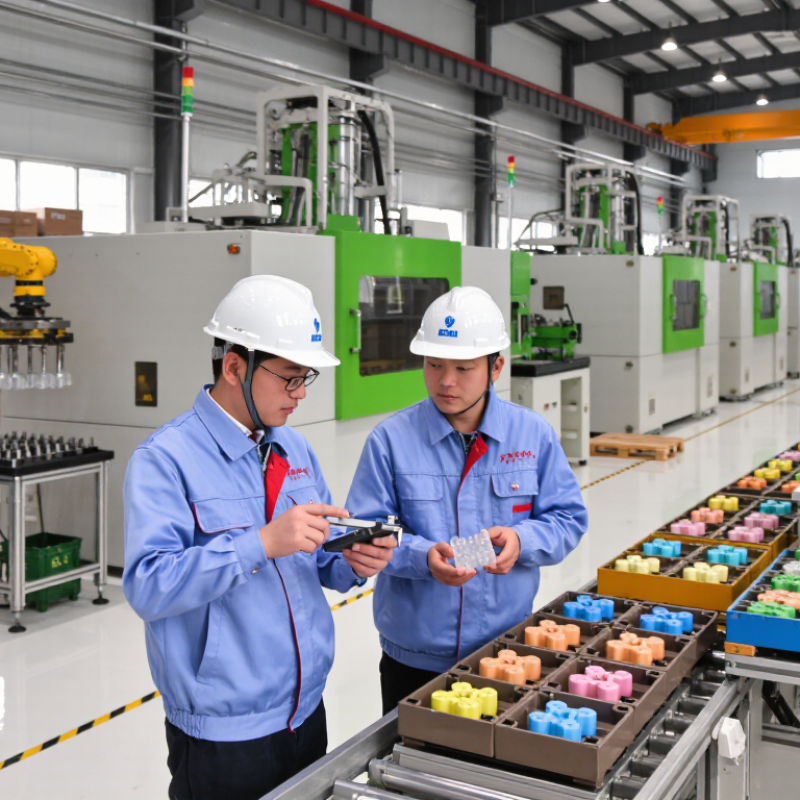
Visit the factory when possible, or request a live video inspection. Check the molding area, mold maintenance records, inspection tools, and packaging process. Confirm whether production is handled internally or subcontracted. Review quality procedures, including incoming material checks, first-article approval, and batch traceability. A supplier should also provide realistic lead times, not optimistic promises.

Compare at least three manufacturers using the same drawing, resin grade, annual volume, and tolerance requirements. Examine tooling experience with ribs, snap fits, warpage risks, and cosmetic surfaces. Request a pilot run before full production. It reveals problems that presentations often hide. A polished factory tour can mislead. Communication deserves careful testing too. Send a technical question and observe the response speed, accuracy, and willingness to admit uncertainty. I have found that the cheapest quote often excludes mold trials, inspection labor, or revision costs. That is not always obvious. Clarify mold ownership, maintenance responsibility, payment stages, change control, and corrective-action procedures in writing. Reliable cooperation grows from documented evidence, transparent communication, and repeatable production results.

Use this material-processing benchmark when researching and comparing qualified Chinese thermoplastic injection molding manufacturers. A capable supplier should be able to document equipment and process control suitable for the required melt-temperature window. Actual settings vary by resin grade, part design, tooling, and process requirements.

Evaluate Equipment, Materials, and Production Capabilities

Finding a capable Chinese thermoplastic injection molding partner requires more than comparing hourly prices. In factory audits, I examine machine condition, process records, and operator discipline. Ask for clamp-force ranges, shot-size limits, controller history, and maintenance logs. Clean oil lines and labeled material bins matter. Small details reveal habits.

Evaluate whether equipment matches your part, not merely your annual volume. A thin-wall housing may need fast injection and stable pressure control. Glass-filled nylon demands suitable screw design, drying equipment, and moisture monitoring. Request a documented mold trial with measured fill time, cavity pressure, weight variation, and key dimensions. Samples should come from normal production conditions. A polished showroom sample proves little. I have seen attractive parts fail after humidity exposure because drying controls were treated casually.

Production capability includes engineering support, tooling coordination, inspection, and delivery resilience. Check for calibrated gauges, first-article reports, and lot-level traceability. Review defect data, corrective-action reports, and peak-season capacity. Ask to see the inspection area. Can the team explain what happens when dimensions drift? Clear answers build confidence. Yet no supplier is flawless. Leave room for pilot runs, independent testing, and a written escalation process. This may feel slower, but it exposes risks before large-scale production.

Verify Quality Systems, Certifications, and Factory Standards

When searching for a top thermoplastic injection molding partner in China, inspect systems before equipment. Ask for current quality certificates and verify their scope, expiry dates, and issuing bodies. ISO 9001 is useful, but it does not automatically prove stable molding. Request process records for similar materials, including resin drying, melt temperature, pressure, and cycle time. A capable factory can explain these numbers clearly. Vague answers deserve a second visit.

Factory standards appear in small details. Check labeled material storage, calibrated gauges, clean molding areas, and controlled mold maintenance. Review incoming inspection, first-article approval, and final inspection records. Traceability should connect each shipment to a machine, mold, operator, material lot, and production date. For safety-related parts, ask about relevant industry certifications and test reports. Confirm laboratories and testing methods, rather than accepting scanned documents without context.

An on-site audit reveals more than a presentation. Watch a live production run and compare the approved sample with current parts. Ask how nonconforming pieces are isolated and corrected. I once treated a neat factory floor as strong evidence; that judgment was too quick. A polished area can hide weak corrective action. Independent sampling and a small pilot order reduce uncertainty. The best supplier welcomes difficult questions, shares limits honestly, and provides measurable evidence instead of confident promises.

How to Find China Top Thermoplastic Injection Molding? - Verify Quality Systems, Certifications, and Factory Standards

Evaluation Dimension Relevant Standard or Reference What to Verify Acceptable Evidence Recommended Check Frequency Risk if Not Verified
Quality management system ISO 9001:2015 Documented control of orders, design or process changes, purchasing, production, inspection, nonconformities, and corrective actions. Current certificate, certification scope, certificate validity, issuing certification body, audit status, and sample quality records. Before approval and during annual supplier review. Inconsistent processes, weak traceability, and repeated quality problems.
Automotive quality capability IATF 16949:2016, where automotive production is applicable Use of advanced quality planning, process risk analysis, control plans, measurement-system analysis, statistical process control, and production-part approval practices. Valid certificate within the correct manufacturing scope, process flow, PFMEA, control plan, capability studies, and PPAP-related records. At project launch and after major process or tooling changes. Higher risk of variation, launch delays, and customer-specific compliance gaps.
Medical-device quality controls ISO 13485:2016, when medical devices are involved Risk-based controls, production cleanliness, validation of special processes, complaint handling, and device-history traceability. Certificate with relevant scope, validated process records, cleanroom or controlled-environment procedures where required, and traceability samples. For every regulated project and at each major regulatory or process review. Regulatory nonconformity, insufficient traceability, or unsafe product release.
Environmental management ISO 14001:2015 Control of waste, energy use, emissions, chemical handling, legal obligations, and environmental objectives. Valid certificate, environmental permits where applicable, waste-transfer records, chemical-management procedures, and audit findings. At onboarding and at least once per year. Environmental violations, shipment disruption, and increased compliance exposure.
Worker health and safety ISO 45001:2018 and applicable Chinese occupational-safety requirements Machine guarding, lockout and tagout, operator training, emergency response, personal protective equipment, and accident reporting. Current certificate where available, safety inspection records, training logs, emergency-drill records, and factory-observation results. During the initial audit and every follow-up visit. Personnel injury, production interruption, and legal or ethical concerns.
Material identification and traceability ISO 9001 documented-information controls; customer-specific requirements Lot identification from incoming resin through drying, molding, inspection, packing, and shipment. Resin batch records, supplier certificates or declarations, drying logs, production labels, inspection reports, and mock-recall results. For each production lot. Difficult root-cause analysis, uncontrolled material substitution, and broad product recalls.
Dimensional inspection capability ISO 10012 measurement-management principles; drawing tolerances and agreed inspection plans Availability of calibrated measuring equipment, suitable gauges, controlled inspection methods, and trained inspectors. Calibration certificates, equipment register, gauge-control procedure, first-article report, and dimensional inspection data. Calibration according to risk and manufacturer requirements; review each production lot. False acceptance or rejection caused by unreliable measurements.
Process capability and stability Statistical process control principles; customer-defined capability targets Monitoring of critical dimensions and process variables such as melt temperature, mold temperature, injection pressure, holding pressure, and cycle time. Control charts, capability studies, approved control plans, alarm limits, reaction plans, and trend reports. During validation, launch, and at a frequency based on product risk. Part-to-part variation, flash, sink marks, warpage, short shots, and unstable production.
Mold and machine maintenance Documented maintenance and production-equipment controls Preventive maintenance for injection machines, molds, hot runners, cooling systems, dryers, robots, and auxiliary equipment. Maintenance schedules, completed work orders, spare-parts records, mold-history cards, and machine-condition logs. Based on operating cycles, equipment condition, and product criticality. Unexpected downtime, dimensional drift, tooling damage, and missed delivery dates.
Factory cleanliness and contamination control Product-specific cleanliness requirements; ISO 14644 where a classified cleanroom is required Separation of raw materials, regrind, finished goods, maintenance activities, and controlled production areas. Cleaning schedules, housekeeping audits, area controls, particle or environmental records where applicable, and visual inspection. Daily operational checks and periodic formal audits. Foreign-material contamination, cosmetic defects, and failure of regulated-product requirements.
Change control and approval ISO 9001 change-control expectations; customer-specific approval requirements Control of resin grade, colorant, mold repair, machine settings, subcontracting, inspection methods, and production location changes. Engineering-change forms, risk assessments, trial-run reports, revised documents, customer approvals, and retained samples. Before implementing any change that may affect fit, form, function, safety, or compliance. Unapproved deviations, field failures, and loss of product qualification.
Subcontractor and material-supplier control ISO 9001 externally provided processes and services Approval, monitoring, and re-evaluation of resin suppliers, mold makers, surface finish suppliers, laboratories, and outside processors. Approved-supplier list, supplier audits, incoming inspection, certificates of analysis, purchase specifications, and performance records. At onboarding and according to supplier risk and performance. Uncontrolled outsourced operations and variable incoming materials.
Independent factory verification Supplier audit protocol; customer quality agreement Whether documented procedures match actual practices, records are authentic and complete, and production capacity matches the proposed program. On-site audit, production-floor walkthrough, employee interviews, live machine observation, record sampling, corrective-action closure, and pre-shipment inspection. Before first order, after major nonconformity, and periodically for critical suppliers. Overstated capabilities, hidden subcontracting, counterfeit certificates, or undisclosed process risks.
Verification principle: A certificate demonstrates that a management system has been assessed against a standard; it does not by itself guarantee product quality, process capability, or suitability for a specific application. Always confirm the certificate scope, validity, issuing body, actual factory location, and objective production records.

Assess Pricing, Communication, Lead Times, and After-Sales Support

How to Find China’s Top Thermoplastic Injection Molding Supplier

Price should be compared through a complete cost sheet, not a single quotation. Request resin grade, part weight, mold steel, cavity count, tooling maintenance, packaging, and delivery terms. A lower mold price may hide higher scrap or correction costs. The 2023 PlasticsEurope report shows plastics production remains highly resource-intensive, so material efficiency directly affects unit pricing. Ask for historical scrap rates and actual machine utilization.

Communication predicts execution quality. Require one technical contact, one commercial contact, and written response times. Send a 3D file, tolerance table, surface standard, and annual volume forecast. Then test the supplier with a small design change. Clear feedback should include risks, not only approval. Communication was my weak screening point once; fast replies did not guarantee strong engineering judgment.

Lead times must separate design, mold fabrication, sampling, approval, and mass production. Request a dated Gantt plan with inspection gates. The 2024 Reshoring Institute manufacturing survey highlights continuing supply-chain uncertainty, making buffer planning essential. Confirm the supplier’s backup machines and local material availability. Late delivery hurts.

After-sales support needs measurable commitments. Check warranty duration, mold storage, spare-part response, corrective-action reports, and replacement policies. ISO’s 2023 Survey recorded more than 1.26 million ISO 9001 certificates worldwide, but certification alone cannot prove practical support. Review recent nonconformance records and customer references. Ask who pays when a dimensional failure appears after production approval. That answer matters.