
Choosing the right Foam Magnetic Blocks for kids involves more than comparing colors, shapes, and prices. A reliable set should support safe, open-ended play while matching the child’s age, abilities, and interests. Look closely at the foam surface, stitching, magnet placement, and edge construction. Magnets should remain securely enclosed, even when pieces are squeezed, dropped, or pulled apart repeatedly. Clear age guidance and recognized toy safety testing also matter.
In real playrooms, durability becomes obvious quickly. A block may look attractive online but split after several weeks of building. Check customer feedback for comments about loose parts, peeling covers, weak connections, and unpleasant odors. Soft textures are helpful for younger children, while stronger magnetic joins may suit older builders creating towers, animals, or small houses. Supervision remains important, especially for toddlers and children who still explore objects with their mouths. Keep damaged pieces away immediately.
No set is perfect.
I once underestimated storage, and scattered blocks soon became a daily problem. A washable surface, a sturdy container, and clear color sorting can make play easier. However, more pieces do not always mean better learning. Children often create more thoughtfully with a smaller, well-designed collection. Consider whether the blocks encourage balance, spatial reasoning, storytelling, and cooperative play. This guide will examine those practical details, while acknowledging an important limitation: product quality can vary between batches and sellers. Careful checking is still necessary.
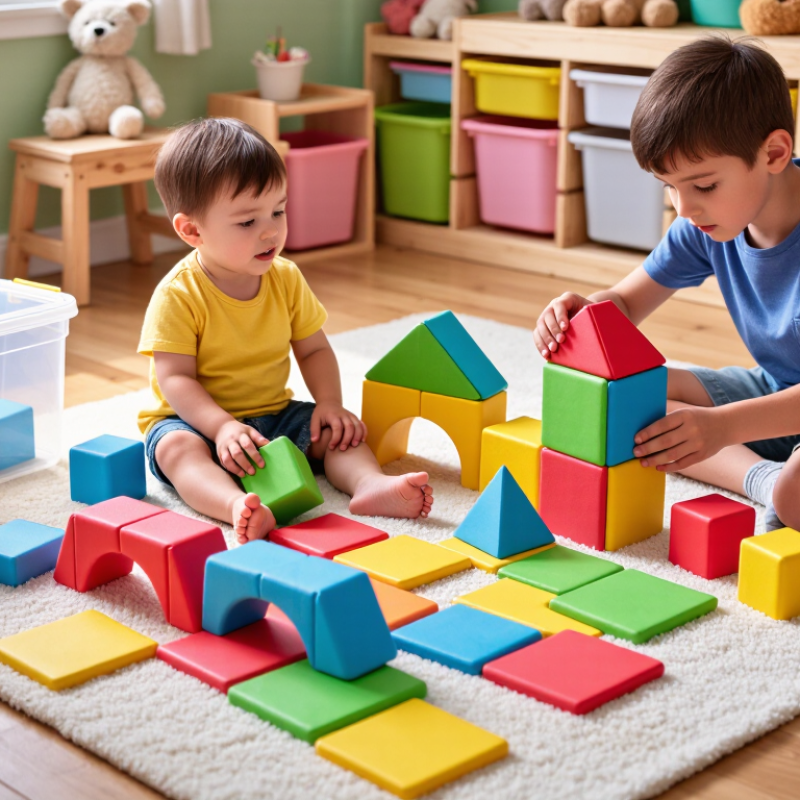
Foam magnetic blocks are soft construction toys that connect through enclosed magnets. They help children explore balance, shape, color, and simple engineering. The foam feels light in small hands, while the magnetic edges make building less frustrating. A suitable set should use dense, resilient foam that resists tearing after repeated drops. Magnets must stay securely sealed inside every piece. Stronger magnets are not always better. They can make separation difficult for younger children.
Tips: Feel the edges before buying. They should be smooth, not sticky or sharply uneven. Check the recommended age, piece size, and independent safety testing. Avoid sets with loose covers, cracked foam, or unclear material information. Wipe surfaces with a damp cloth, then let them dry fully. Supervise toddlers, even when the pieces look large.
Shape variety also matters. Squares, triangles, windows, and arches support more creative structures than identical tiles. Bright colors can encourage sorting, but color alone does not show quality. I once favored a very large set because it offered more pieces. That choice was not fully practical; storage became difficult, and children ignored several shapes. A smaller set with clear geometric variety may work better. Test whether the blocks connect firmly but separate without excessive force. If a piece changes shape quickly, its foam may lack durability. Observe the first few play sessions carefully.
Choosing foam magnetic blocks begins with the material, not the colorful design. During a hands-on inspection, press each block and check for cracks, loose layers, or exposed magnetic edges. Foam should recover its shape without shedding crumbs. Ask for material disclosures, including tests for heavy metals, phthalates, and harmful coatings. “Non-toxic” alone is not enough.
Magnet security deserves strict attention. Magnets must remain fully enclosed after twisting, bending, and repeated drops. The U.S. Consumer Product Safety Commission’s Toy-Related Deaths and Injuries report estimated 145,500 toy-related injuries treated in emergency departments among children under 15 in 2022. That figure covers all toys, not foam blocks, but it shows why small components need careful review. CPSC safety guidance also warns that swallowed high-powered magnets can cause severe internal injuries. Small magnets are not suitable for toddlers.
Age labels should match the child’s actual abilities, not only the birthday printed on the box. For children under three, avoid blocks with detachable parts or accessible magnets. For older children, choose larger pieces with clear instructions and supervised first use. Check whether the product follows applicable toy standards, such as ASTM F963-23 in the United States or EN 71 requirements in Europe. Labels can still be imperfect. Recheck seams after play, especially when a child bends pieces, bites corners, or builds near a sibling.
| Assessment Area | What to Check | Preferred Characteristics | Why It Matters | Recommended Evaluation |
|---|---|---|---|---|
| Age Label | Manufacturer-stated minimum age and developmental suitability | Clear age guidance that matches the child’s ability to follow instructions and play safely | Age ratings reflect factors such as magnet access, piece size, complexity, and supervision needs | Use only within the stated age range |
| Children Under 3 | Presence of magnets, detachable components, or small parts | Choose only products specifically designed and labeled for this age group, with no accessible small parts or magnets | Swallowed magnets can cause serious internal injuries, especially when more than one magnet is swallowed | Avoid products with accessible or detachable magnets |
| Children Ages 3–5 | Ability to recognize hazards and use the blocks as intended | Large, lightweight pieces; fully enclosed magnets; rounded edges; close adult supervision | Preschool children may still mouth objects or pull, bite, and throw components during play | Suitable only when the product is age-labeled and supervised |
| Children Ages 6+ | Construction complexity, magnet strength, and independent play skills | More complex shapes may be appropriate, but magnets must remain securely enclosed and undamaged | Older children can manage advanced building tasks but may apply greater force during construction | Suitable when the child follows storage, inspection, and safety instructions |
| Foam Material | Foam type, surface finish, odor, and physical condition | Durable, resilient foam with a smooth, non-shedding surface and no strong persistent chemical odor | Damaged or crumbling foam can create loose pieces and expose internal components | Reject blocks that crack, crumble, split, or shed particles |
| Magnet Containment | Whether magnets can be seen, felt, moved, or removed from the foam | Magnets fully sealed inside the block with no gaps, openings, or loose inserts | Accessible magnets present an ingestion hazard and may cause serious intestinal injury if swallowed | Do not use any block with a loose, exposed, or movable magnet |
| Seams and Adhesion | Quality of bonded or stitched joints around magnet pockets | Even seams with no peeling, bubbling, open corners, or separation after normal handling | Weak seams can allow magnets or foam fragments to escape during play | Inspect before first use and regularly thereafter |
| Edges and Corners | Shape, firmness, and impact behavior | Rounded or softened edges without rigid sharp inserts or hard protrusions | Soft edges reduce the likelihood of cuts and impact injuries during active play | Prefer lightweight blocks with no hard exposed components |
| Safety Testing | Documentation for applicable toy-safety requirements | Evidence of testing against relevant requirements such as ASTM F963 in the United States or EN 71 in the European Union | These standards address areas including mechanical hazards, flammability, and chemical safety | Review current compliance information for the intended market |
| Chemical Safety | Material and coating disclosures, including accessible surface treatments | Clear material information and testing for applicable limits on restricted substances | Children may touch surfaces frequently and may place toys near their mouths | Prefer products with transparent material and compliance information |
| Cleaning and Hygiene | Recommended cleaning method and resistance to moisture | Wipe-clean, non-absorbent surfaces that can be cleaned without soaking or harsh chemicals | Porous or damaged foam can retain moisture and support odor or microbial growth | Clean according to instructions and dry completely before storage |
| Durability Inspection | Cracks, punctures, deformation, exposed magnets, or unusual rattling | Blocks remain intact after ordinary assembly, separation, and supervised play | Wear can change the safety profile even when the product was safe when new | Remove and replace any damaged block immediately |
| Storage | Storage location and access after play | Keep blocks in a closed container away from infants, pets, and children below the labeled age | Unsupervised access increases the chance of accidental swallowing or misuse | Store separately from ordinary foam blocks without magnets |
| Supervision | Level of adult monitoring required | Active supervision for young children, group play, and children who mouth or misuse toys | Supervision allows immediate removal of damaged pieces and helps prevent unsafe behavior | Do not treat magnetic blocks as automatically safe for unsupervised play |
| Important: If a magnet is swallowed or may have been swallowed, seek urgent medical attention. Do not wait for symptoms to appear. | ||||
Choosing foam magnetic blocks starts with the child, not the package. For toddlers, large rounded pieces are easier to grip and harder to misplace. Older children may prefer triangles, squares, arches, and wheels for more complex structures. Look for soft foam that compresses slightly, then returns to shape. That tactile response matters during long floor play. Still, softness can reduce edge stability. That trade-off is easy to miss.
Magnetic strength should support building without making pieces difficult to separate. I test a sample bridge by lifting one end slowly. If the structure collapses immediately, the magnets may be too weak. If pieces snap together sharply, younger users may struggle. A useful set balances attraction across every side. Test it gently. Do not judge strength from one impressive tower. Uneven magnets create frustrating gaps, especially when children build wide walls or tall towers.
Set contents often matter more than a high piece count. A practical starter set might include squares, triangles, rectangles, and connectors. Extra shapes add value only when they encourage new designs. Check whether the pieces support flat patterns, walls, and simple vehicles. A storage bag helps, especially after pieces scatter under furniture. I would also inspect seams and enclosed magnets before regular use. Some listings explain dimensions poorly, so measure a piece against the child’s hand. More is not always better.
Choosing blocks for different learning goals and play styles begins with observing the child, not the packaging. For early builders, choose large, lightweight pieces with simple shapes and steady magnetic connections. These support grasping, stacking, balance, and spatial language. The American Academy of Pediatrics’ 2018 clinical report links playful learning with executive function, language, and self-regulation. Ask whether the child prefers quiet patterns, dramatic structures, or shared building.
For children practicing early mathematics, select sets with squares, triangles, and contrasting colors. Encourage counting sides, comparing heights, and predicting which tower may fall. UNICEF’s 2018 Learning through Play report identifies communication, problem-solving, cooperation, and self-regulation as core skills developed through play. A child who enjoys stories may build a farm or rescue station, while a sensory-seeking child may prefer soft, oversized pieces and repeated joining.
Play style matters more than piece count. Open-ended sets allow children to change plans without one correct answer. However, I have sometimes overvalued variety. Too many pieces can create decision fatigue. Fewer shapes may produce deeper play. Check seams, surface durability, magnet security, and age guidance carefully; foam can tear after rough use. For group play, choose enough pieces for two children, then watch whether sharing actually happens. Independent play is valuable too. Verify safety information against applicable standards, such as ASTM F963 or EN 71, and inspect magnets regularly. Small details matter.
Durability should begin with the foam, not the bright colors. Press each block gently and check whether it quickly regains its shape. Dense foam usually handles repeated building better than thin, easily dented material. Examine the seams and magnetic housings closely. Loose stitching or raised edges may worsen after frequent use. No toy is indestructible. That matters.
During play, blocks often meet spilled juice, dusty floors, and damp hands. Choose surfaces that can be wiped with mild soap and water. Avoid deeply textured foam, which can trap crumbs and moisture. Removable covers may improve hygiene, but only if they stay securely attached. Always follow the maker’s cleaning instructions. Harsh chemicals can weaken coatings. My first choice once focused on softness alone. That was a mistake.
Storage affects value more than many buyers expect. A simple fabric bin can keep pieces together, while a divided container helps children find matching shapes quickly. Check whether the set includes enough large pieces for meaningful structures, rather than counting total pieces alone. Strong magnets, washable surfaces, and replaceable components may justify a higher price over time. Look for clear age guidance and evidence of safety testing from recognized independent laboratories. Magnets should remain fully enclosed, with no visible damage or movement. Inspect them regularly, especially after drops. A cheaper set may seem practical, yet frequent replacement can cost more and create unnecessary waste.
