What is the Best PT100 Temperature Sensor for Your Needs?
Choosing the right PT100 temperature sensor is crucial for accurate temperature measurement. Renowned industry expert Dr. Emily Carter states, "The right sensor can make a world of difference in precision." This highlights the importance of selecting a PT100 temperature sensor that fits your specific requirements.
PT100 sensors are widely used due to their reliability and accuracy. They operate based on the principle that the resistance of platinum changes with temperature. Many industries utilize these sensors, from food processing to pharmaceuticals. Selecting the best one can be challenging, given the numerous options available.
In the search for the ideal PT100 temperature sensor, factors such as response time and temperature range should be considered. However, understanding specifications can be overwhelming. Each application may require a different configuration. Reflection on the unique demands of your project is essential in making the right choice. Balancing accuracy, durability, and price will help achieve the most reliable results.
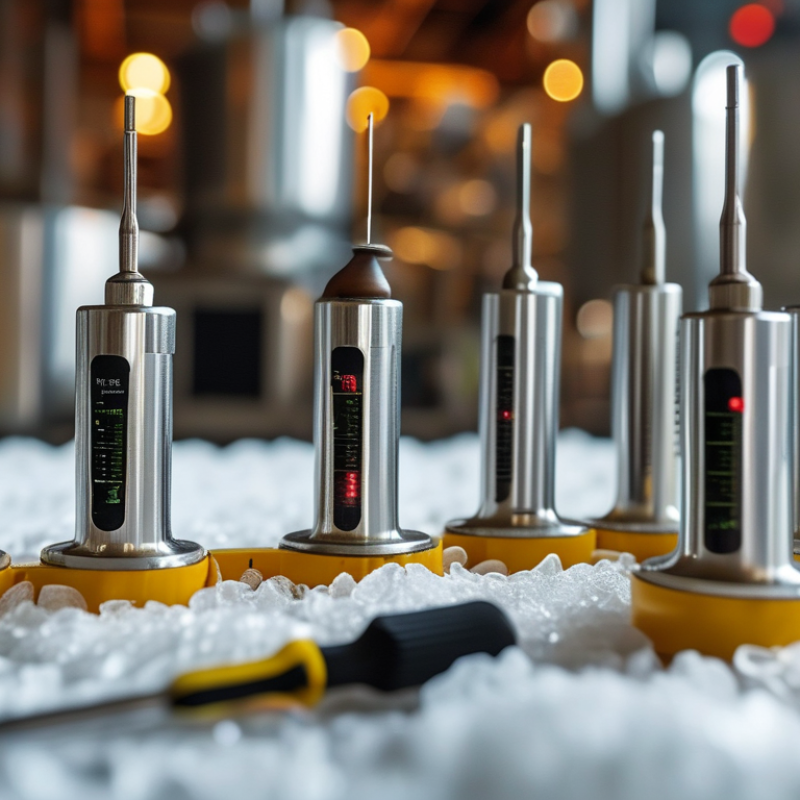
Understanding PT100 Temperature Sensors: Basics and Functionality
PT100 temperature sensors are essential for numerous applications. These sensors are characterized by their resistance, which changes according to temperature variations. Typically, this resistance is 100 ohms at 0°C. The simplicity of PT100 sensors makes them popular in industries like HVAC, food processing, and laboratories.
Understanding their functionality requires some nuances. PT100 sensors operate using the principle of resistance temperature detection (RTD). As the temperature increases, the resistance increases linearly. This relationship provides accurate temperature readings over a wide range. However, environmental factors can affect their performance. For instance, the placement of the sensor significantly influences the measurement accuracy. Poor positioning might lead to incorrect readings, making it crucial to consider this aspect carefully.
The installation of PT100 sensors can also pose challenges. Factors such as wiring and interface with measurement devices can complicate data collection. Users may find themselves needing to address these issues to maintain reliability. Reliability is vital, but sometimes overlooked during implementation. Understanding these factors can enhance the effectiveness of PT100 sensors in any setup. Addressing them ensures better performance and satisfactory results.
Key Specifications to Consider When Choosing a PT100 Sensor
When choosing a PT100 temperature sensor, key specifications are critical. One of the most important factors is accuracy. The best sensors have a tight tolerance, typically ±0.1°C. This level of precision is essential for applications requiring strict temperature control, such as laboratories and industrial processes.
Additionally, consider the temperature range. PT100 sensors operate well across a broad spectrum, typically from -200°C to +850°C. Knowing your application’s exact temperature range helps narrow down your options. Response time is another crucial aspect. A fast response time ensures that the sensor reflects real-time changes in temperature, essential for dynamic environments.
Don’t forget to examine the connection type. Sensors come with various connectors, and matching it to your system is vital. In some cases, users may find the specifications overwhelming. It’s not uncommon to overlook minor details like insulation materials or mounting options. Ensure that these features align with your application’s requirements to avoid future complications. Always question how each specification impacts your operational needs. Each aspect holds weight in the decision-making process.
Applications of PT100 Sensors: Where They are Most Effectively Used
PT100 temperature sensors are integral in various industries due to their accuracy and reliability. They are commonly used in manufacturing, food processing, and HVAC systems. According to a report by MarketsandMarkets, the global temperature sensor market is projected to reach $7.5 billion by 2026. This growth reflects the increasing demand across various applications that require precise temperature monitoring.
In industrial applications, PT100 sensors excel in environments where temperature consistency is critical. For instance, in pharmaceuticals, maintaining a stable temperature is vital for product integrity. Similarly, the food industry benefits from PT100 sensors to ensure that stored products remain within safe temperature ranges. A study from the International Journal of Precision Engineering and Manufacturing highlighted that temperature fluctuations could lead to significant losses in product viability.
While PT100 sensors are widely regarded for their performance, limitations exist. They require periodic calibration to maintain accuracy. In high-temperature environments, their response time might lag. This can impact systems where real-time data is essential. As industries evolve, it’s crucial to continually evaluate the effectiveness of these sensors to ensure they meet specific operational needs.
Comparison of Common PT100 Sensor Types and Their Advantages
PT100 temperature sensors are widely used due to their accuracy and reliability. These sensors can be categorized into various types, including thin-film and wire-wound sensors. Each type has unique features that make them suitable for different applications. For instance, thin-film PT100 sensors are often favored in industrial settings for their fast response times. They can achieve response times as low as 0.1 seconds.
Wire-wound PT100 sensors provide excellent stability and linearity. According to a report by the National Institute of Standards and Technology, wire-wound versions typically exhibit a temperature coefficient of resistance of 0.00385, making them highly precise. This characteristic is essential for applications requiring stringent temperature control, such as laboratories and pharmaceuticals. However, they can be more sensitive to mechanical stress compared to thin-film designs.
In selecting the right PT100 sensor, one must consider the environment. For example, adverse conditions like humidity and vibration can affect performance. Not all sensors handle these factors equally. Some PT100 sensors may drift in readings under extreme conditions, necessitating regular calibration. Balancing precision, response time, and environmental resistance is crucial to ensure the best choice for any specific application.
Maintenance Tips for Ensuring the Longevity of PT100 Sensors
When it comes to maintaining PT100 temperature sensors, regular checks are crucial. Ensure that the sensors are clean and free from contaminants. Dust and grime can affect their accuracy. Use a soft cloth to wipe the sensor surface gently. It is essential to avoid abrasive materials that might scratch the sensor.
Temperature fluctuations can impact sensor performance. Therefore, it’s wise to monitor the operating environment. Keep the sensors away from direct heat sources or extreme cold. An unstable environment can lead to premature wear. Additionally, frequent calibration checks should be part of the routine. Sensors may drift over time, affecting their readings. Regular calibration ensures consistency and reliability.
Consider the mounting method as well. Secure installation is vital to avoid mechanical shocks. Vibration can damage sensitive components. If possible, use mounting brackets that reduce shock and stress on sensors. These practices help maintain sensor functionality, but they do require diligence. Over time, it can be easy to overlook these tasks. Yet, neglecting them can lead to costly replacements or inaccurate readings.
What is the Best PT100 Temperature Sensor for Your Needs? - Maintenance Tips for Ensuring the Longevity of PT100 Sensors
| Sensor Type | Temperature Range (°C) | Accuracy (%) | Material | Application |
| Standard PT100 | -200 to +850 | ±0.1 | Platinum | Industrial Applications |
| Immersion PT100 | -100 to +500 | ±0.15 | Stainless Steel | Liquid Temperature Monitoring |
| Surface Mount PT100 | -50 to +300 | ±0.2 | Copper | Surface Temperature Measurement |
| Flexible PT100 | -50 to +260 | ±0.2 | Silicone | Non-standard Applications |
| High-Temperature PT100 | -200 to +1200 | ±0.1 | Platinum with ceramic | Furnace and Kiln Use |
